Nineteen Trips Here Put Tea in the Title. This Is What That Buys
Updated September 24, 2026 · 7 min read
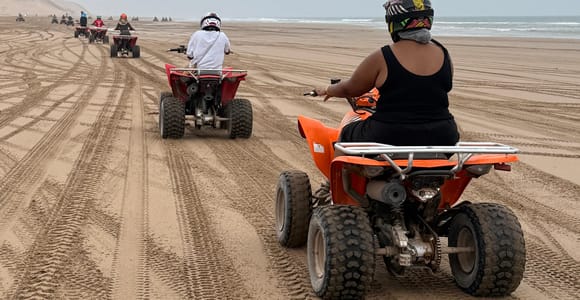
Count the trips that advertise a drink and you get a number that says something about this city: 19 offers in our Agadir stock carry tea in the title. Quad rides with tea in a Berber tent. Camel rides with tea. Seven different buggy trips with tea. A crocodile park with tea. A horse ride along the river with tea and biscuits.
It is not filler. Tea is how a Moroccan host ends something, and the glass at the end of your dusty afternoon is the part of the trip that is genuinely local. It is also, nine times out of ten, poured in a place that sells things. Both of those are worth understanding before you go.
What is actually in the glass
Green gunpowder tea, a fistful of spearmint, and sugar — boiled together rather than stirred in afterwards, which is why you cannot order it unsweetened once it is made.
The pour from a height is not showmanship. It aerates the tea and puts a head of foam on the glass, and a Moroccan host will judge the result by that foam. The first glass is usually tipped back into the pot once or twice to mix it.
Say your piece before the pot goes on. French is understood everywhere in Agadir: peu de sucre gets you less, sans sucre gets you a raised eyebrow and, usually, a separate pot. On an excursion, tell the guide at the start of the day rather than at the tent.
The often-quoted Maghrebi line about the three glasses — the first gentle, the second strong, the third bitter — describes a household ritual, not a tour stop. On a half-day trip you will be handed one glass and possibly a plate of biscuits.
The tea stop is also a shop
This is the thing nobody says out loud, so here it is plainly: on most excursions the tea is served at a pottery workshop, an argan cooperative, a carpet room or a family house that also sells oil and spices. The tea is free and the hope is that you buy something.
That is not a scam, and it is not aggressive here. What helps:
- Drink the tea, look properly, and say no once if you mean no. A clear no is understood; a polite maybe is heard as a negotiation.
- Carry small dirham notes if you do want something. Cooperatives outside the city rarely take cards, and nobody has change for 200 dirhams.
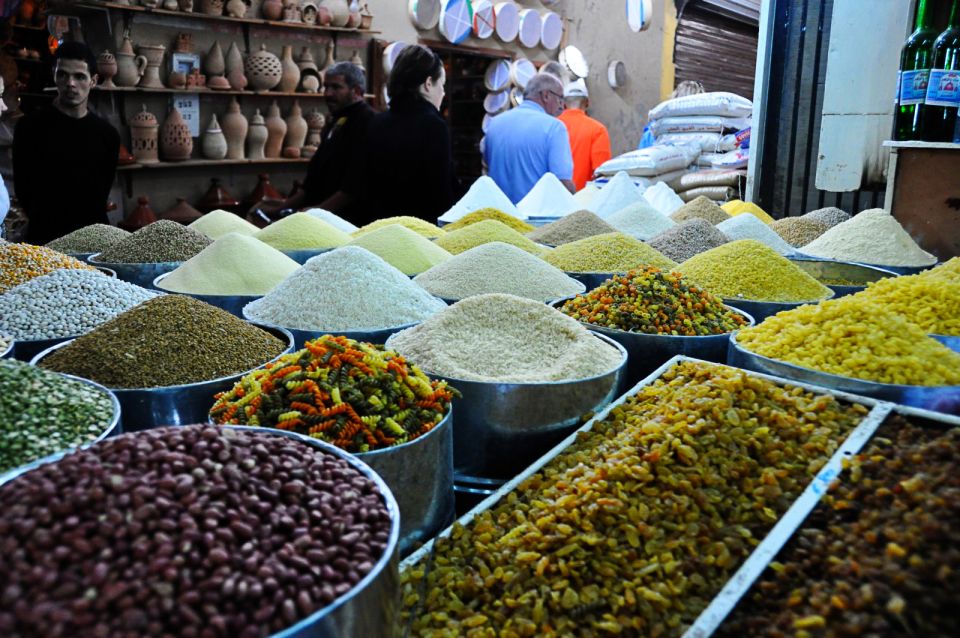
- Do not expect souk prices. You are paying a little more for the visit, the demonstration and the tea. If price is the point, buy in Souk El Had instead — but note the market closes on Mondays.
Argan: what the cooperative is showing you
Agadir sits in the middle of almost the only place on earth where the argan tree grows in quantity, and the knowledge behind the oil is on UNESCO’s Representative List of the Intangible Cultural Heritage of Humanity — inscribed in 2014. The wider argan forest has been a UNESCO biosphere reserve since 1998.
The UNESCO text is specific about who holds the knowledge: rural women, and to a lesser extent men, of the reserve, who harvest, dry, pulp, grind, sort, mill and mix. It calls them “argan women”, and it records that they teach their daughters from a young age. When you watch someone crack nuts between two stones at a cooperative, that is what you are looking at — not a performance invented for buses.
Two practical things that the demonstration rarely spells out:
There are two different oils. The culinary one is pressed from roasted kernels and smells strongly of toasted nuts. The cosmetic one is pressed raw and smells of very little. If a shop sells you one for the other, the nose tells you immediately.
Amlou is the thing to actually buy. Ground almonds, argan oil and honey, sold in jars, eaten with bread at breakfast. It travels better than a bottle of oil and it is harder to fake.
If the trees with the goats in them are what brought you here, that is a different trip and we wrote about it separately under animal experiences; the goats and argan category holds the offers. The oil also turns up in the hammam and spa category, where the massage version is the unroasted kind.
What else people drink here
Orange juice, squeezed in front of you. Morocco grows the oranges in the Souss valley you drive through on any inland excursion, and the juice at a market stand is the cheapest good thing in the city.
Avocado. The thick avocado-and-almond drink sold in cafés is a local staple rather than a tourist invention, and it is closer to a meal than a drink.
Coffee, ordered by proportion. Nous-nous is half coffee, half milk, and is what most people around you are drinking in the morning.
Bottled water. It is what is served and what tours hand out; several of the listings we checked state that water is not included, so buy it before you leave town.
Alcohol, without the coyness
Morocco is a Muslim country in which alcohol is legal, licensed and restricted — and the restriction that matters to Moroccans is not the one that affects you. The law limits the sale of alcohol to Moroccan Muslims; visitors drink in licensed hotels, restaurants and bars without any difficulty, and the large supermarkets in Agadir have a licensed section.
What follows from that in practice:
- You will not find beer or wine in the souk, in an ordinary café or in most family restaurants. This is normal and not a sign of a bad restaurant.
- Drinking in the street or on the beach is not done, and it is the one thing likely to get you spoken to.
- During Ramadan, shop sales stop for the month and many bars close. Hotel bars generally keep serving foreign guests, with less choice. Ramadan is expected to begin around 8 February 2027, subject to the sighting of the moon, and to run for 29 or 30 days.
If you are driving, the question does not arise at all: the legal blood-alcohol limit here is effectively zero, which we set out with the other road rules in the 4x4 day article.
If you want the food end of this
The cooking classes category holds 7 offers, from €34.36, median €44.38 — the smallest category on the site and the slowest-paced thing in it. It is also the only format here where somebody stands next to you long enough to answer the question you actually have, which after three days of guided tea is usually: how do I make this at home?